
How can I stop my elderly parent from falling?
How can I stop my elderly parent from falling?
If your elderly parent is falling more often, there are practical steps you can take to reduce their risk and help them feel safer and more confident at home.
Falls are rarely caused by one issue alone, so effective prevention usually means looking at strength and balance, walking ability, medication, vision, footwear and the home environment.
In this guide, we’ll explain how to prevent falls in elderly people, what changes can make the biggest difference, and when it may be worth seeking professional support.
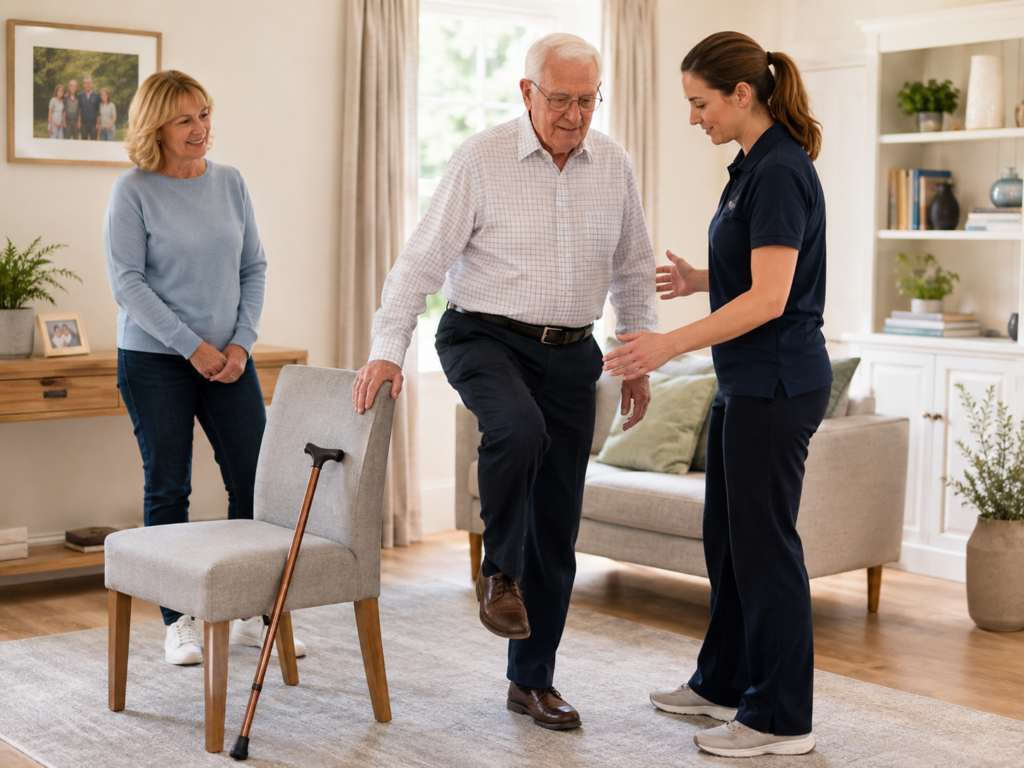
1. Improve Strength & Balance
Reduced leg strength and poor balance are common factors that can increase the risk of falls in older adults. Everyday activities such as getting out of a chair, climbing stairs or recovering from a small trip all require sufficient strength, balance and reaction speed.
Regular strength and balance exercises can help. Exercises such as sit-to-stands, heel raises and appropriately challenging balance activities can improve stability and make everyday movement feel more confident.
However, the right exercises will vary considerably from person to person. Someone who is already falling or struggling with their balance may need a different programme from someone who is independently mobile but beginning to feel less steady.
A physiotherapist can assess strength, balance and mobility and develop a progressive exercise programme based on the person’s individual difficulties. This is particularly useful when your parent has become less active following illness, surgery or a hospital admission.
Concerned that your parent’s strength or balance has deteriorated? Learn more about our Falls Prevention Physiotherapy service.
2. Review Walking & Mobility
Changes in the way your parent walks can provide useful clues about their risk of falling. They may begin walking more slowly, taking shorter steps, holding onto furniture or appearing less confident when turning or navigating uneven surfaces.
Some people benefit from using a walking stick, walking frame or other mobility aid. However, simply buying a walking aid isn’t always the answer. Equipment that is the wrong size, incorrectly adjusted or unsuitable for someone’s particular mobility problem can make walking more difficult rather than safer.
A physiotherapist can assess how your parent walks, transfers from chairs and beds, manages stairs and moves around their usual environment. They can then determine whether a walking aid would be helpful and ensure it is correctly adjusted and used safely.
Importantly, the aim isn’t simply to provide equipment. Where possible, rehabilitation should also address the strength, balance and confidence problems underlying the change in mobility.
If your parent has recently become noticeably less steady, our Falls Prevention Physiotherapy service includes assessment of walking, balance and mobility within their own home.
3. Check Medication & Blood Pressure
If your elderly parent is falling more frequently, their medication and blood pressure are worth considering.
Some medicines can contribute to falls by causing dizziness, drowsiness, reduced alertness or changes in blood pressure. This can become particularly relevant when someone takes several different medications.
Another possible contributor is postural (orthostatic) hypotension — a drop in blood pressure after moving from lying or sitting to standing. Someone experiencing this may feel light-headed, weak or unsteady shortly after standing and may need to sit back down.
If your parent regularly feels dizzy when getting out of bed or standing from a chair, mention this to their GP or another appropriate healthcare professional. A GP or pharmacist can also review their medications and determine whether any could be contributing to their symptoms or falls.
Prescribed medication should not be stopped or changed without appropriate medical advice.
If dizziness seems to be contributing to their falls, read our guide: Why Does My Elderly Parent Keep Falling?
4. Check vision, Feet & Footwear
Falls prevention isn’t only about strength and balance. Eyesight, foot problems and footwear can all affect how safely an older person moves around.
Reduced vision can make it harder to see obstacles, judge the edge of a step or recognise changes in floor level. Regular eye examinations are therefore important, particularly if your parent has noticed a recent change in their vision.
Foot pain, altered sensation or other foot problems can also change the way someone walks. If these are affecting mobility, assessment from an appropriate healthcare professional such as a podiatrist may be helpful.
Footwear should ideally be comfortable, secure and well fitting, with appropriate grip. Loose slippers, worn soles and shoes that don’t stay securely on the foot can make walking less stable.
Look at what your parent actually wears around the house, rather than just their outdoor shoes. If most of their walking happens at home in poorly fitting slippers, that’s the footwear most relevant to their everyday falls risk.
5. Make the Environment Safer
Many falls happen at home, where relatively small environmental hazards can become significant when combined with reduced balance, strength or reaction speed.
Look at the routes your parent uses every day. Pay particular attention to the journey between the bedroom and bathroom, stairs, entrances and frequently used chairs.
Potential hazards can include loose rugs, trailing cables, cluttered walkways, poor lighting and objects that require someone to stretch, bend or climb to reach them. Appropriate handrails or other adaptations may also make certain activities safer.
But falls prevention shouldn’t simply mean removing every rug in the house.
The important question is how your parent interacts with their particular environment. Someone may be perfectly safe walking across an uncluttered room but struggle getting out of their favourite chair, stepping into the shower or negotiating the stairs.
One advantage of a home falls assessment is that these activities can be observed where they actually happen. A physiotherapist can assess mobility within the home and, where appropriate, recommend further assessment by an occupational therapist for equipment or environmental adaptations.
Find out more about how our Home Falls Prevention Physiotherapy assessments work.
6. Don't Ignore Dizziness
If your parent is falling and experiencing dizziness, addressing the cause may be an important part of preventing another fall.
“Dizziness” can mean different things. Some people describe feeling light-headed or faint, while others experience vertigo – the sensation that they or their surroundings are spinning or moving.
Possible causes include changes in blood pressure, medication and problems affecting the vestibular system of the inner ear.
One common vestibular condition is Benign Paroxysmal Positional Vertigo (BPPV). This typically causes short episodes of vertigo associated with movements such as rolling over in bed, looking upwards, bending down or getting in and out of bed.
New or persistent dizziness shouldn’t simply be accepted as part of ageing. Identifying the underlying cause may allow appropriate treatment or management and reduce one of the factors contributing to falls.
Sudden severe dizziness associated with symptoms such as new weakness, facial drooping, difficulty speaking, severe headache, chest pain or loss of consciousness requires urgent medical assessment.
7. Get the right Falls Prevention Assessment
If your parent has fallen more than once, become increasingly unsteady or lost confidence in their mobility, it may be time for a more detailed falls assessment.
Falls in older adults are often multifactorial, meaning several smaller problems combine to increase someone’s overall risk. Reduced strength, impaired balance, changes in walking, medication, blood pressure, dizziness, vision and the home environment may all contribute.
That’s why simply telling someone to “be careful” rarely solves the problem.
A physiotherapy falls assessment can examine strength, balance, walking, transfers and functional mobility, helping to identify physical factors that may be contributing to falls. An individual rehabilitation programme can then target the areas where improvement is possible.
A physiotherapist may also identify issues requiring input from another professional, such as a GP, pharmacist, occupational therapist, optometrist or podiatrist.
Not sure how high your parent’s falls risk is?
Our free STEADI Falls Risk Self-Assessment takes just a few minutes and can help identify whether they may be at increased risk of falling.
→ Take the Free STEADI Falls Risk Self-Assessment
If your parent is already experiencing repeated falls, you can also read Why Does My Elderly Parent Keep Falling? to understand some of the common reasons why falls occur.
And if you’d prefer an individual assessment in your parent’s own home:
If you, or a relative, are concerned about falls in Worcester Park, Epsom & Ewell, Stoneleigh, Cheam or London then contact Bee Mobile Physiotherapy to discuss how home-based rehabilitation could help.
F.A.Q.
Frequently Asked Questions
The best way to reduce falls is to identify why your elderly parent is falling in the first place. Common factors include reduced strength and balance, changes in walking, medication, poor vision, unsuitable footwear and hazards around the home. A physiotherapy falls assessment can identify individual risk factors and provide a personalised plan to improve strength, balance, mobility and safety.
Exercises that improve leg strength, balance and functional mobility can help reduce falls risk in older adults. These may include sit-to-stands, heel raises, stepping exercises and progressively more challenging balance activities. Exercise should be appropriate for the person’s abilities, particularly if they have already fallen. A physiotherapist can assess their strength and balance and prescribe exercises at a safe but effective level.
Repeated falls can have many causes, including muscle weakness, poor balance, changes in walking, dizziness, medication side effects, reduced vision or an underlying medical condition. Often, several factors contribute at the same time. If your parent keeps falling, they should have a comprehensive assessment to identify potentially treatable causes and determine whether physiotherapy or further medical assessment is needed.
An older person may benefit from a physiotherapy assessment after a fall if they have become weaker, less confident, unsteady when walking or have experienced repeated falls or near-misses. A physiotherapist can assess strength, balance, walking and everyday mobility and develop a rehabilitation programme designed to reduce their risk of further falls.
Keeping walking routes clear, improving lighting, addressing loose rugs and trip hazards, wearing appropriate footwear and ensuring frequently used items are easy to reach can all help prevent falls at home. However, the home environment is only one part of falls prevention. A home physiotherapy assessment can also identify problems with walking, transfers, stairs, strength and balance and recommend changes specific to the individual and their home.