
What is Mobile Physiotherapy?
A guide to Home Physiotherapy
Mobile physiotherapy brings professional physiotherapy assessment and rehabilitation directly to you in your own home. Instead of travelling to a clinic, a physiotherapist visits you to assess your movement, strength, balance and mobility and provide treatment in the environment where you complete your everyday activities.
Physiotherapy at home can be particularly useful for people recovering from surgery or a hospital stay, older adults experiencing falls or reduced mobility, and anyone who finds travelling to a clinic difficult.
At Bee Mobile Physiotherapy, we provide private home physiotherapy across South West London and Surrey, with rehabilitation tailored to your individual needs and goals.
Looking for physiotherapy at home? Contact Bee Mobile Physiotherapy to discuss how we can help.
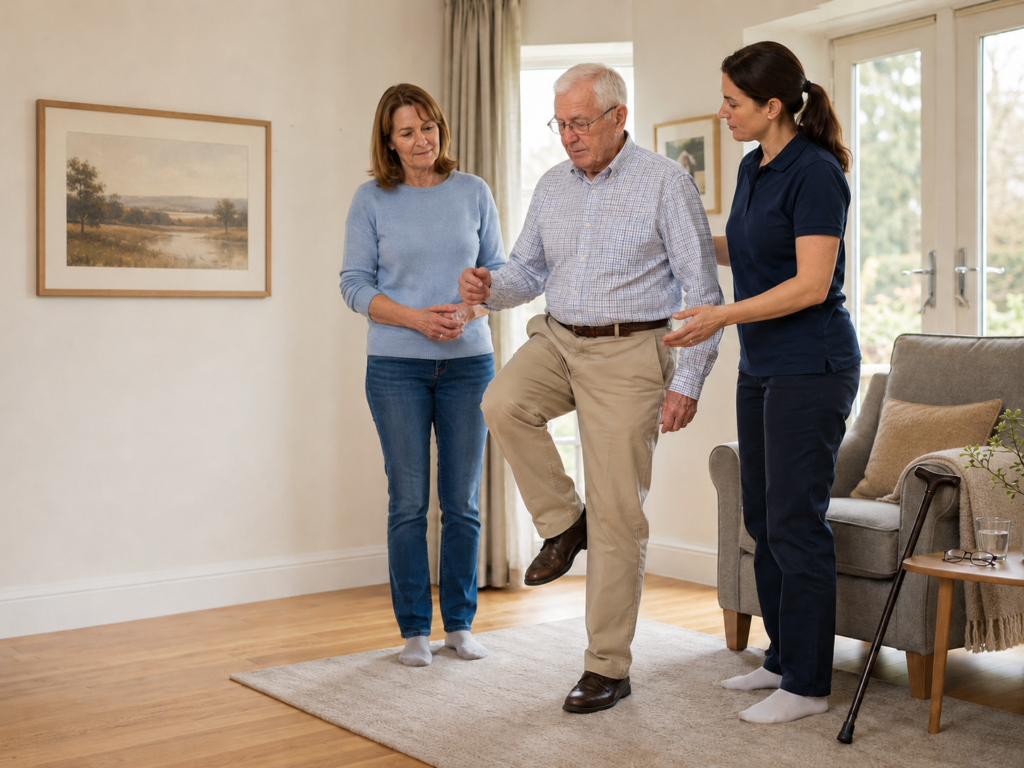
What is Mobile Physiotherapy?
Mobile physiotherapy – sometimes called home physiotherapy or home visit physiotherapy – is physiotherapy delivered in your own home rather than in a clinic or hospital.
The fundamental principles are the same. Your physiotherapist will assess the problem, identify factors contributing to your symptoms or reduced mobility, agree meaningful goals with you and develop an appropriate rehabilitation programme.
The difference is where this happens.
Being assessed at home allows your physiotherapist to see how you manage within your real everyday environment. Rather than practising on clinic stairs or discussing a difficult chair, for example, your physiotherapist can assess the actual stairs, furniture and walking routes you use each day.
For people whose main goals involve walking, balance, stairs, transfers or independence at home, this can make home physiotherapy particularly useful.
How Does Physiotherapy at Home Work?
A mobile physiotherapist travels to your home at an agreed appointment time with the equipment needed to complete your assessment and treatment.
Appointments will vary according to your needs, but physiotherapy at home can include assessment of:
- strength and joint movement
- walking and mobility
- balance and falls risk
- getting in and out of chairs or bed
- managing stairs
- pain and physical function
- walking aids and mobility equipment
- your home exercise programme
Treatment can then take place within the same environment.
For example, if you’re struggling to climb your stairs after an operation, rehabilitation can incorporate your own staircase. If you’re having difficulty walking from the bedroom to the bathroom, this can be assessed directly rather than trying to recreate the problem in a clinic.
The aim is to make rehabilitation relevant to the activities you actually need to perform.
What can a Mobile Physiotherapist Treat?
A mobile physiotherapist can assess and treat many of the same problems that would traditionally be seen in a physiotherapy clinic, although home physiotherapy is particularly well suited to problems affecting mobility and everyday function.
At Bee Mobile Physiotherapy, our home visits particularly focus on:
Post-operative rehabilitation – helping people rebuild strength, movement and mobility following operations such as hip and knee replacements.
→ Learn more about Post-Operative Physiotherapy at Home
Falls and balance problems – assessing strength, balance and walking to identify physical factors that may be contributing to falls.
→ Explore our Falls Prevention Physiotherapy Service
Post-hospital rehabilitation – helping people regain mobility and independence following illness or a hospital admission.
→ Learn more about Post-Hospital Rehabilitation
Reduced mobility and deconditioning – gradually rebuilding strength, physical capacity and confidence following periods of illness, inactivity or reduced mobility.
If you’re unsure whether your particular problem is suitable for treatment at home, contact us to discuss your needs before arranging an appointment.
Who benefits from home physiotherapy?
You don’t need to be housebound to benefit from physiotherapy at home.
For some people, home visits are simply more convenient. For others, travelling to a clinic can itself become a significant barrier to accessing rehabilitation.
Home physiotherapy may be particularly helpful for:
- older adults experiencing reduced strength or mobility
- people who have experienced falls or become increasingly unsteady
- people recovering following surgery
- people recently discharged from hospital
- people who find travelling to appointments difficult
- people whose rehabilitation goals involve stairs, transfers or mobility around their home
- people who would benefit from a relative or carer being involved in their rehabilitation
It can also be useful when someone appears to manage well in a clinical environment but is having difficulty completing specific activities at home.
If reduced mobility or repeated falls are becoming a concern, contact Bee Mobile Physiotherapy to discuss whether a home assessment would be appropriate.
What happens during the first home visit?
Your first physiotherapy home visit begins with a discussion about the difficulties you’re experiencing, your relevant medical history and what you would like to achieve through physiotherapy.
Your physiotherapist will then complete an assessment appropriate to your needs.
This might include looking at your strength, joint movement, balance, walking and ability to complete everyday activities. Where relevant, you may also be assessed getting out of your usual chair or bed, walking around the home or managing the stairs.
The important part is identifying not only what you are struggling with, but why.
Your physiotherapist can then discuss their findings with you and agree an individual treatment plan. This may include exercises, strength and balance training, walking practice, mobility advice and strategies for completing everyday activities more safely or independently.
Where appropriate, family members or carers can also be involved with your consent.
Is Home Physiotherapy Suitable after Surgery?
Yes. Home physiotherapy after surgery can be particularly useful during the early stages of recovery when pain, weakness, swelling or reduced mobility can make travelling to appointments more difficult.
Following a hip or knee replacement, for example, physiotherapy may focus on improving movement and strength, progressing exercises, improving walking and gradually returning to everyday activities.
Having physiotherapy at home also means rehabilitation can address practical challenges such as getting in and out of your own bed or chair, managing your stairs and walking safely around your home.
As recovery progresses, rehabilitation can be advanced according to your individual goals.
→ Learn About Our Post-Operative Physiotherapy Service
If you or a relative are preparing for or recovering from joint replacement surgery, you may also find our Hip Replacement Recovery Guide and Knee Replacement Recovery Guide helpful.
Can a Physiotherapist Assess Falls and Mobility at Home?
Yes – and there can be significant advantages to assessing falls, balance and mobility in someone’s own home.
Falls are rarely caused by one issue alone. Reduced strength, poor balance, changes in walking, dizziness, medication, vision, footwear and the home environment can all contribute to someone’s overall risk.
A home physiotherapy assessment allows a physiotherapist to assess physical factors such as strength, balance and walking while also observing how someone moves around their everyday environment.
This might include watching how they:
- get out of their usual chair
- walk between rooms
- turn and change direction
- use a walking stick or frame
- get in and out of bed
- manage their stairs
This can help identify problems that may not be obvious in a clinic.
Worried about a parent’s falls?
If your parent has started falling or becoming increasingly unsteady, read Why Does My Elderly Parent Keep Falling? to understand some of the possible reasons.
You can also complete our Free STEADI Falls Risk Self-Assessment to identify whether you or your relative may be at increased risk of falling.
For individual assessment and rehabilitation, learn more about our Falls Prevention Physiotherapy Service.
Mobile Physiotherapy Vs Clinic Physiotherapy
Neither mobile nor clinic-based physiotherapy is automatically better. The best setting depends on what you need from rehabilitation.
Clinic physiotherapy can provide access to specialist rehabilitation and exercise equipment and may be particularly suitable for people who are independently mobile and able to travel easily.
Mobile physiotherapy offers a different advantage: your physiotherapist can assess and treat you in the environment where you actually live.
That can be particularly valuable when rehabilitation focuses on:
- walking and functional mobility
- falls and balance
- getting in and out of chairs or bed
- managing stairs
- recovery immediately following surgery
- rebuilding independence following hospital admission
Some people may begin rehabilitation at home before progressing to independent exercise, a gym or clinic as their mobility improves.
The right option should ultimately be based on your condition, circumstances and rehabilitation goals.
Areas we Cover
Bee Mobile Physiotherapy provides private mobile physiotherapy across South West London and Surrey, bringing assessment and rehabilitation directly to you at home.
Our current home physiotherapy areas include:
Home Physiotherapy in Worcester Park
Home visits across Worcester Park and the surrounding area.
Home Physiotherapy in Cheam
Private physiotherapy and rehabilitation delivered at home in Cheam.
Home Physiotherapy in Stoneleigh
Home visits for rehabilitation, mobility and falls prevention in Stoneleigh.
Home Physiotherapy in Epsom & Ewell
Private home physiotherapy across Epsom, Ewell and surrounding areas.
Mobile Physiotherapy in London
Home physiotherapy across selected areas of South West and West London, including Wimbledon, Putney, Battersea, Fulham, Hammersmith and Kensington & Chelsea.
If your area isn’t listed, contact us and we can confirm whether a home visit is available at your postcode.
Whether you’re recovering from an operation, rebuilding your mobility following a hospital stay or becoming concerned about falls, home physiotherapy allows rehabilitation to take place where it matters — in your everyday environment.
Bee Mobile Physiotherapy provides individual home-based assessment and rehabilitation across South West London and Surrey, with treatment focused on helping you achieve the activities and independence that matter to you.